| Index | Last | Var.(%) |
|---|---|---|
| BEL 20 | 2142.41 | 2.32 |
| DAX | 6435.6 | 1.65 |
| IBEX 30 | 6661.3 | 2.10 |
| CAC 40 | 3084.09 | 1.88 |
| FTSE 100 | 5403.28 | 1.86 |
| AEX | 295.95 | 1.86 |
| DJIA | 12502.81 | -0.01 |
| Nasdaq | 2839.08 | -0.29 |
| FTSE MIB | 13456.03 | 3.41 |
| TSX Composite | 11451.78 | 1.52 |
| ASX | 4136.5 | -0.89 |
| Hang seng | 19039.15 | 0.62 |
| Straits Times | 2823.75 | 1.20 |
| ISEQ 20 | 498.38 | 1.72 |
Text size
Whether it’s finding a doctor or figuring out how to fill your prescription, we give you the basics you need to stay healthy in Luxembourg.Getting to know another country’s health care system can be daunting, but is definitely worth the trouble if you’re planning on a long-term stay. Eventually, you’re going to need to see the doctor for something – even if it’s just something minor – and setting yourself up early will make it easier later on.
Luxembourg's healthcare system is one of the best in Europe. Luxembourg has a high standard of state-funded healthcare. The state provided healthcare system does cover each citizen of the country with basic medical coverage. In addition, private healthcare is also available. All citizens have the right to choose their doctor, specialist and hospital. Luxembourg’s Union of Sickness Funds oversees the health service in Luxembourg.
The state system
The state provides free basic health cover to all citizens and the Caisse de Maladie collects healthcare contributions. All employed citizens and employees contribute to this system, which means that the healthcare taxes are taken out of your pay. There is a cap of 6,625 EUR. Employees and employers pay half each. If you are self-employed you have to pay all of the tax, but the amount does vary based up your profession. All dependent family members are covered by family members who pay into the insurance system. Children are covered under their parents, and students are covered until age 27.
Foreigners coming to live in Luxembourg without working (e.g. retirees) must produce proof of health insurance in order to obtain a residence permit. If you qualify for ‘non-resident’ tax status, you may not be required to contribute to national social security, in which case you will probably be covered by your employer’s health care plan.
Fees
In Luxembourg, the health care system works on a reimbursement basis. You submit receipts for consultations, treatment and medicines to your caisse for reimbursement at the appropriate rate, which varies from 80 to 100 percent. All medical fees in the country are decided by the Caisse de Maladie.
Most doctors visits are reimbursed at 100%, but the reimbursement rates for other services vary. Usually the reimbursement for prescription medicine is 78 percent, though this may vary from 0 percent to 100 percent. Levels of reimbursement on dentistry will depend on whether your dentist has a contract with the Caisse de Maladie. Emergency treatment in a neighbouring country may also qualify for reimbursement at the same rates as in Luxembourg.
Private health insurance
Many people in Luxembourg take out supplementary insurance with one of the non-profit health insurance agencies or mutual associations (mutuelles) affiliated to the Ministry of Social Security. Many employers offer supplementary cover as a benefit of employment. A mutuelle pays the portion of your medical fees that isn’t covered by your caisse and may offer extended coverage for such things as hospitalisation, eye care, dental treatment and medical services outside Luxembourg.

Doctors
You can choose your own doctor. However if you are seeking state medical care, ensure that your doctor is contracted into the state scheme. Otherwise, you will have to pay the fees yourself.
GPs have different hours than doctors in most countries; they are closed on Wednesday afternoons. They operate on an appointment basis known as a rendezvous, hold ‘walk-in’ surgeries or utilise a combination of the two. There may be long queues for walk-in surgeries and some doctors operate a supermarket style ticket system. Doctors will make house visits but these visits are usually limited to a certain time of day.
Hospitals
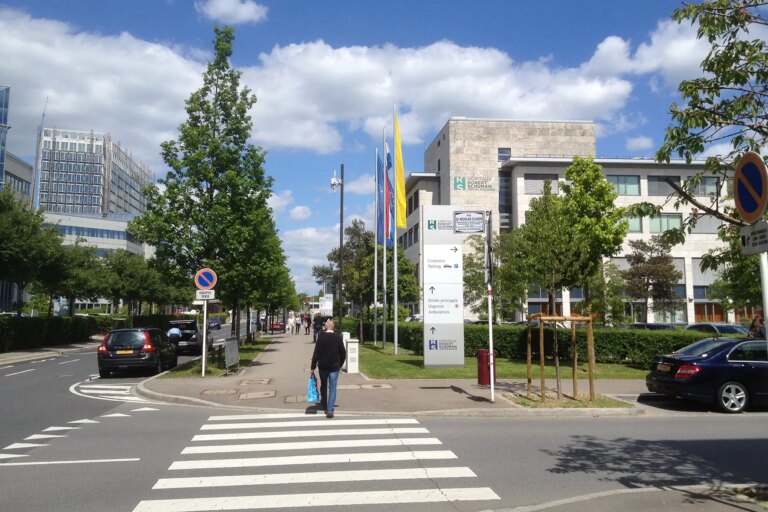
Hospitals are identified by the international sign of a white H on a blue background. There are no private hospitals in Luxembourg; all hospitals are run by the Caisse de Maladie. You must have a referral from your doctor for an admission to a hospital if your case is not an emergency.
When going to a hospital, you should take your own pyjamas, robe and slippers, as well as personal toiletries and towels. You’ll also need a small amount of money to pay for telephone calls, television programmes, bottled water and other items offered by private services within the hospital.
Emergency Care
The medical emergency phone number in Luxembourg is 112. Emergency care is provided by the emergency department at large hospitals and is known as cas d’urgence or spoedgeval. Treatment is free even if you have no insurance.
Not all hospitals in Luxembourg have emergency services, and out of hours coverage is rotated among the hospitals in the area. The duty schedule is published in newspapers, and is posted in pharmacies and doctors’ offices, as well as at hospitals.
If you need a doctor outside normal office hours, you should first try contacting your regular doctor. It’s a good idea to ask your doctor early on how emergencies should be handled, as some medical systems and insurers insist on doctor authorisation for emergency services in all except life-threatening situations.
If you suffer from a condition that may need emergency treatment, you should carry a written description of the condition, the medicines you’re taking, including doses, and any other relevant details. This can be in English or the local language and will save you considerable time (and possibly your life) if a medical emergency strikes and you’re unable to speak for yourself.
Pharmacies 
Pharmacies can be identified by a sign displaying a large green cross. If you purchase non-prescription drugs from a chemist, you’ll pay full price; but if your doctor prescribes the same products, your health care insurer will usually reimburse at least a part of the cost.
The pharmacist may ask for a description of your symptoms. In many ways, pharmacists have greater responsibility for your health and safety than your doctor. Pharmacists are held responsible for selling drugs or remedies, which further illness or result in adverse side effects - even if the drugs concerned were prescribed by a doctor.
Only doctors and consultants can prescribe medicine. Doctors are unable to provide prescriptions to the pharmacist over the phone, but the pharmacist may make changes after a telephone call to the doctor.
Pharmacies are usually open during normal shopping hours, but there is always a duty chemist available for service during off-hours. You may have to pay additional costs for medicines purchased during off-hours and this is non-reimbursable.
Where to get information
Caisse de Maladie des Ouvriers - CMO (Sickness Insurance Fund for Manual Workers)
125 Route d’Esch
L-2973 Luxembourg Ville
Telephone: 00352 49 83 311
E-mail: ucm@secu.lu
Information in English is available online from the 'Organismes de sécurité sociale' (Social security) website.
Veneta Krumova / Expatica 2012
Sources: Europe-cities.com / NHS Choices / healthgov.net
Je vous félicite pour votre initiative. Vraiment, aucun mot ne peut qualifier l'extrême qualité de votre travail.
<a href="http://www.etoiledevenus.com">horoscope</a>
[url=http://www.etoiledevenus.com]horoscope[/url]
Je vous félicite pour votre initiative. Vraiment, aucun mot ne peut qualifier l'extrême qualité de votre travail.
<a href="http://www.etoiledevenus.com">horoscope</a>
[url=http://www.etoiledevenus.com]horoscope[/url]
Since 2008, the work permit and the residence permit (for third country national workers) have been merged into a single permit, the Autorisation de séjour. Since 2009, dual or multiple citizenship has been permitted.
Whether you decide to buy or rent in the Grand Duchy, here is our short housing guide, including a look at some of the areas you might want to live in.
Whether it’s finding a doctor or figuring out how to fill your prescription, we give you the basics you need to stay healthy in Luxembourg.